

Top Prams
Add a review FollowOverview
-
Founded Date 15 Ekim 1971
-
Sectors Accounting / Finance
-
Posted Jobs 0
-
Viewed 5

Company Description
Responsible For The Stroller Pushchair Pram Budget? 10 Fascinating Ways To Spend Your Money
Understanding the Differences: Stroller, Pushchair, and Pram
When it concerns baby transport, three terms typically utilized interchangeably are stroller, pushchair, and pram stores near me. However, each of these baby carriers has its distinct features, benefits, and utilize cases. Parents browsing the world of parenting gear need to comprehend these distinctions to make informed choices for their families. In this post, we will delve deep into the meanings, functions, pros and cons, and considerations for each type of baby carrier, making it simpler for moms and dads to pick the suitable option for their needs.
Tabulation
- Definitions and Key Differences
- Functions of Strollers, Pushchairs, and Prams
- Advantages and disadvantages
- When to Use Each Type
- Frequently asked question Section
- Conclusion
1. Meanings and Key Differences
To better comprehend strollers, pushchairs, and prams, let’s start with a clear definition of each:
| Term | Definition |
|---|---|
| Stroller | A light-weight, collapsible gadget developed mainly for older infants and toddlers who can stay up unaided. Strollers generally include a seat that can recline and frequently consist of cup holders, storage baskets, and canopies. |
| Pushchair | Comparable to a stroller however often used interchangeably. Pushchairs typically describe more robust models developed for infants who can support themselves in a seated position. |
| Pram | A more conventional baby carriage developed for newborns. prams and strollers have a flat, reclining surface that supports the baby’s back and head, enabling a safe and comfortable ride. |
2. Features of Strollers, Pushchairs, and Prams
Comprehending the unique functions of each type can assist parents make informed choices based upon their household’s requirements. Below is an in-depth function contrast.
| Function | Stroller | Pushchair | Pram |
|---|---|---|---|
| Age Suitability | 6 months and up | 6 months and up | Newborn to around 6 months |
| Seating Position | Upright or reclined | Upright or slightly reclined | Flat recline |
| Weight | Light-weight, easy to transfer | Varies, but typically much heavier than strollers | Much heavier, designed for stability |
| Folding Mechanism | Compact, one-hand fold frequently | Varies, typically foldable | Bulkier, not usually foldable |
| Storage Capacity | Typically consists of a basket | Varies, frequently has storage | Minimal storage area |
| Canopy | Typically has a sunshade | Can include a sunshade | Generally no sunshade |
3. Benefits and drawbacks
Each type of baby provider includes its own benefits and drawbacks. Below is a breakdown of the pros and cons for each:
Stroller
Pros:
- Lightweight and simple to maneuver.
- Appropriate for toddlers and older babies.
- Typically includes features like cup holders and storage baskets.
Cons:
- Not suitable for newborns without additional devices.
- Can be less steady on uneven surface areas.
Pushchair
Pros:
- Sturdier than common strollers, offering much better assistance for older babies.
- Usually has flexible functions and styles.
- Many models provide reclining seats for naps.
Cons:
- Can be much heavier and bulkier than strollers.
- Some models may not fold compactly.
Pram
Pros:
- Designed specifically for newborns, providing optimal assistance and convenience.
- Offer a flat sleeping surface, which is ergonomically appropriate for babies.
- Often visually pleasing with a timeless design.
Cons:
- Bulky and much heavier than strollers and pushchairs.
- Minimal functionality as the baby grows (normally just for the first 6 months).
4. When to Use Each Type
Understanding the proper ages and uses for each type of baby provider can considerably enhance its performance:
- Pram: Best fit for the very first 6 months of a baby’s life. Perfect for walks in the park or check outs to household, where convenience is vital.
- Stroller: Ideal for young children aged 6 months and older. Developed for active parents who are often on the go. Appropriate for shopping trips and outings to the zoo or play ground.
- Pushchair: Good for parents desiring a middle ground in between a stroller and a pram. Appropriate for somewhat older infants who can stay up however might still need assistance.
5. FAQ Section
Q: Can I use a stroller or pushchair for a newborn?A: While some strollers and pushchairs offer newborn devices, it is typically suggested to use a pram store near me for optimum assistance and comfort.
Q: What are the security features I should search for?A: Look for a tough frame, protected harness system, brakes, and adjustable canopies for UV protection.
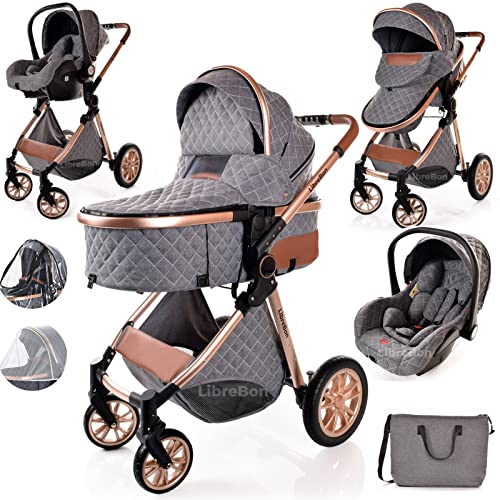
Q: Are there travel systems readily available that integrate these items?A: Yes, many brands offer travel systems that incorporate strollers and safety seat for ease of transport.
Q: Which one is easier to collapse and carry?A: Strollers generally offer a more compact pushchair and light-weight fold compared to prams and pushchairs.
Q: Do I really need a pram if I have a stroller?A: If you prepare on using it just for older infants and toddlers, a stroller will be enough. Nevertheless, if you value optimal comfort and assistance for a newborn, a pram is advised.
6. Conclusion
Picking between a stroller, pushchair, and pram includes comprehending the special features, benefits, and limitations of each type. By considering your kid’s age, your lifestyle, and particular requirements, you can select the best option that makes sure security, comfort, and benefit.
In the end, the journey of parenthood is about making the best choices one step at a time. With this knowledge, parents can confidently browse their alternatives and make options that are right for both them and their youngsters. Whether walking through the park, shopping, or checking out friends, the right baby provider can make every getaway enjoyable and hassle-free.
